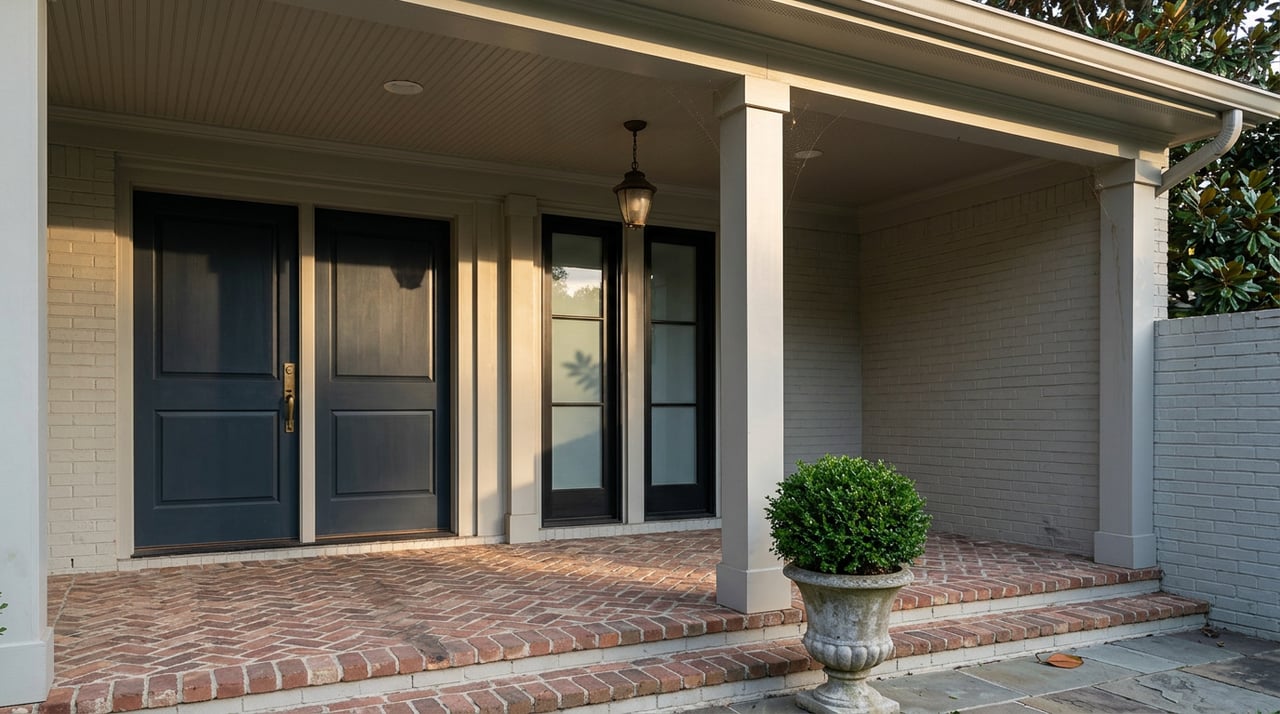
Dallas Conservation District Rules Every Buyer Should Check
August 13, 2026
August 13, 2026
A house in East Dallas does not have to be old, protected, or particularly grand to fall under rules that limit what you can do to it. It just has to sit inside a line most buyers never think to ask about until they are already three weeks into a renovation plan. Two homes on the same block, built the same year, can carry completely different sets of restrictions on paint color, garage placement, and whether a second story is even allowed. Nothing about the houses explains the difference. The boundary does.
This is the part of buying in Dallas's older, closer-in neighborhoods that rarely makes it into a listing description. Lakewood, the M Streets, Vickery Place, Belmont Addition, Bishop Arts, Kessler Park and a dozen other pockets of the city operate under either a conservation district or a historic district ordinance, and the two are not interchangeable. Knowing which one applies, and knowing that the line itself can move after you've already closed, changes how you should approach an option period.
Dallas currently lists 16 established numbered conservation districts, from King's Highway (C.D. #1) through Northern Hills (C.D. #17), according to the city's own introduction to conservation districts. Lakewood is C.D. #2. The M Streets, known formally as Greenland Hills, is C.D. #9. Vickery Place is C.D. #15, established in 2006 to keep its Spanish and Colonial Revival streetscape intact after several older homes were replaced with construction that ignored the block around it.
A conservation district is a zoning overlay, not a landmark designation. It generally regulates what's visible from the street: rooflines, setbacks, garage placement, sometimes paint colors, and the architectural style allowed for new construction. Lakewood's ordinance, for example, requires new construction within its boundary to match the neighborhood's Tudor, Spanish Eclectic, French Eclectic, or Colonial and Georgian character. The district's homes were built predominantly between the mid-1920s and the 1940s, many of them by Dallas architect Clifford D. Hutsell, according to KERA News.
A historic or landmark district is a heavier instrument. It's administered by the City of Dallas Landmark Commission, and it applies to more than just what a passerby can see. The Landmark Commission's own tips for property owners state plainly that a Certificate of Appropriateness is required for work on any facade including the rear, for foundation repair, and for major landscaping changes, with very few exceptions, per the City of Dallas Office of Historic Preservation. Swiss Avenue, designated in 1973 as the city's first local historic district, falls into this category. So does Munger Place and Bryan Place.
The distinction matters because the two processes move at different speeds and cost different amounts.
| Conservation District | Historic District | |
|---|---|---|
| Who reviews exterior changes | City staff, per each district's own ordinance | Full Landmark Commission |
| What's typically covered | Facades, rooflines, setbacks, garage placement, some paint colors | All exterior work, foundation repair, major landscaping |
| Added time to a permit | Administrative, often same-day to a few days | 30 to 60 days on top of standard review |
| Appeal fee if denied | Varies by district | $300 to $700 depending on use |
Fee figures come from the city's permit fee schedule, effective July 2025. The 30 to 60 day estimate for Landmark Commission review reflects the added timeline noted in a 2026 Dallas permitting guide, on top of the city's standard 10 to 15 business day residential plan review.
The clearest illustration of what this boundary can mean to a buyer isn't hypothetical. In 2022, a group of Lakewood residents began the multi-year process of expanding the Lakewood Conservation District to include the adjacent Monticello and Westlake subdivisions, areas that had never been covered by the original ordinance. The Dallas City Planning Commission held hearings on the revised boundary in late 2024, with residents on both sides testifying for over an hour.
"We would not have purchased that home."
That's how Ashley Martin, a Lakewood homeowner whose house sat inside the newly proposed expansion boundary, described the situation to KERA once she learned her renovation options were about to change under an ordinance that didn't exist when she signed her contract.
That single sentence is the entire thesis of this piece. The house didn't change. The neighborhood didn't change. A zoning line moved, and her ability to modify her own home moved with it.
This is the part most renovation guides skip entirely, and it's the piece that actually matters for anyone shopping in East Dallas or Oak Cliff right now. A conservation district isn't a fixed historical fact about a neighborhood. It's a petition-driven process that any qualifying block can initiate, and it can expand years after the original boundary was drawn.
The Lakewood expansion took roughly two years from the original 2022 proposal to a revised boundary reaching the planning commission in November 2024. Right now, in 2026, a different neighborhood is walking the same path. Wynnewood North, a midcentury pocket of Oak Cliff, has an active Conservation District Committee that has already secured a Determination of Eligibility from the city and is currently in city staff-led pre-application meetings, according to the Wynnewood North Conservation District Committee. Yard signs went out to supportive neighbors starting in July 2026.
If you're buying a house in a neighborhood that currently has no overlay at all, that absence of restriction is not a permanent feature of the property. It's a snapshot of where the process happens to stand today. A buyer weighing a teardown-and-rebuild plan, or a significant addition, in a neighborhood with an active or eligible conservation committee should treat that committee's progress as part of their due diligence, the same way they'd track a pending zoning change on an adjacent commercial lot.
For anyone actively comparing houses in Lakewood, the M Streets, Vickery Place, Kessler Park, Bishop Arts, or any of Dallas's other older neighborhoods, a few concrete steps belong in the process before, not after, the contract is signed:
Does a conservation district lower a home's value? The research on this points the other direction more often than not. Preservation Dallas's executive director has publicly described conservation district status as one of the best tools for protecting neighborhood character while still allowing appropriate change, and buyers frequently cite the predictability of a protected streetscape as a reason they chose a particular block.
Is a conservation district the same as an HOA? No. A conservation district is a city zoning overlay enforced by Dallas through its permitting process. An HOA is a private agreement enforced by a homeowners association. A property can be subject to both, and each operates independently of the other.
Who do I contact to confirm a district's specific rules? The City of Dallas Office of Historic Preservation, at 1500 Marilla Street, handles Certificate of Appropriateness applications and can confirm exactly what's regulated for a given address. For conservation district questions specifically, Preservation Dallas, based at 2922 Swiss Avenue, maintains detailed information on each district's ordinance.
Does buying in a district affect financing or appraisal? Conservation district status does not typically change how a property is financed or appraised. Lenders and appraisers generally treat these as standard residential transactions, though it's worth discussing any planned renovation scope with your lender early if district review could affect your timeline.
A house with real character usually comes with real rules attached, and in Dallas's oldest neighborhoods that's often the point. The trick isn't avoiding a conservation or historic district. It's knowing which one you're standing in before you write the offer, not after you've started planning the addition. If you're comparing specific blocks in Lakewood, the M Streets, Vickery Place, or anywhere else in Dallas and want a clear read on what a given address can and can't do before you go under contract, The Texas Bespoke Realty Group is glad to walk through it with you.
Stay up to date on the latest real estate trends.
Buying, selling, relocating, or investing—we're committed to making your experience effortless. With proven expertise and strategic guidance, we help you achieve the best possible outcome.
The Texas Bespoke Realty Group
(214) 674-8257
[email protected]
Address
4131 N. Central Expressway, Ste # 900
Dallas,TX 75204