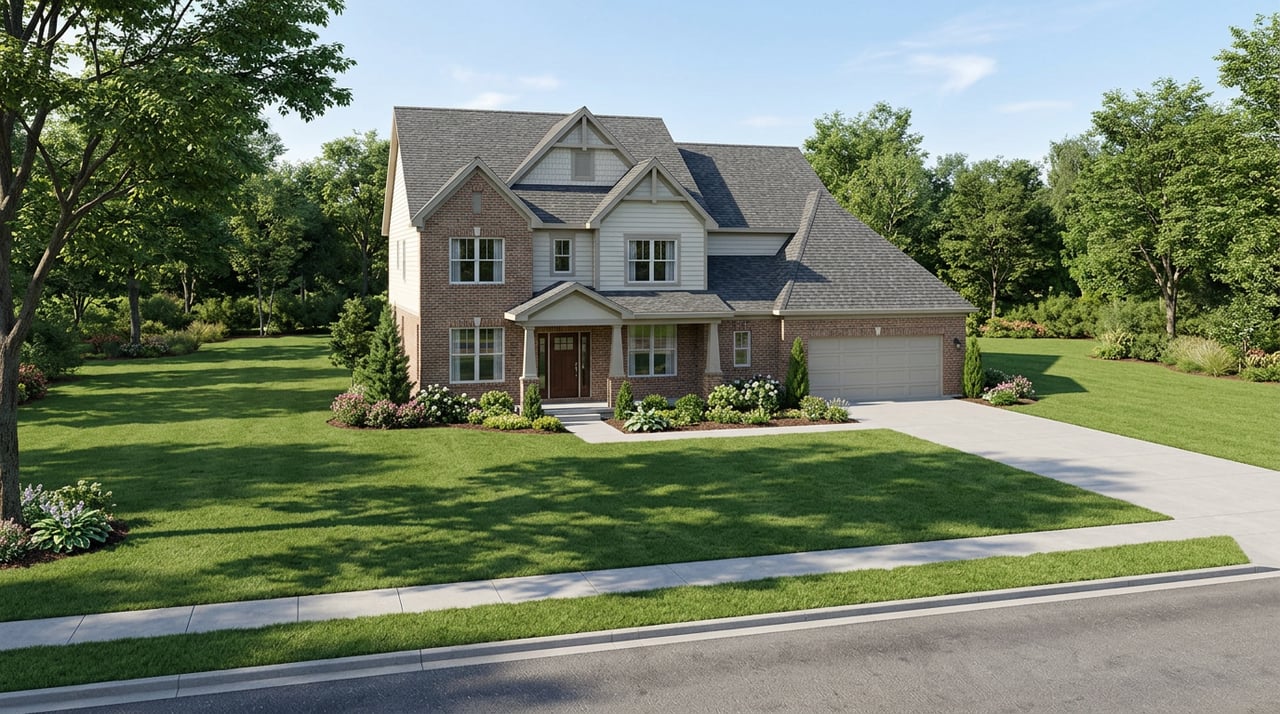
In Celina, Stop Asking If There's a Special Tax District. Ask Which Kind.
September 17, 2026
September 17, 2026
A buyer standing in a Celina model home this fall is usually doing the same math everyone does: check the price, check which side of the school boundary the lot sits on, feel reassured, sign. The Lilyana community, for instance, straddles both Celina ISD and Prosper ISD, and it's easy to assume that boundary is where the real cost difference hides. It isn't. On Lilyana's own published numbers, the combined tax rate for a home on the Celina ISD side runs 2.016464 per $100 of assessed value, and the Prosper ISD side runs 2.021664. On a $700,000 home, that gap works out to roughly $36 a year. That's not a number worth losing a lot over.
The actual cost swing in Celina new construction lives somewhere else entirely, and most buyers never think to ask about it until the closing documents are already in front of them.
Celina has grown fast enough that special taxing and assessment districts are no longer the exception in new construction, they're closer to the default. The City of Celina maintains its own public list of active Public Improvement Districts, and it currently includes Cambridge Crossing, Creeks of Legacy, Cross Creek Meadows, Edgewood Creek, Glen Crossing, and Chalk Hill No. 2, each filing its own Annual Service Plan Update for the current cycle. Add Mustang Lakes PID #1 and the Lakes at Mustang Ranch PID, and the pattern is clear: if you're buying new construction in Celina right now, budget for a special district on the assumption that one applies, then verify the details rather than the existence.
But "special district" isn't one thing. Celina's new-construction communities mostly use Public Improvement Districts, a financing tool created under Chapter 372 of the Texas Local Government Code where a city levies a special assessment against specific platted lots to repay bonds for streets, water, sewer, and drainage. A Municipal Utility District is a different animal: an actual political subdivision with taxing authority, created under the Texas Water Code, whose rate is recalculated each year based on the total assessed value of everything inside its boundary. Collin County MUD 1 sits just outside Celina proper, in more than 1,000 acres north of Frontier Parkway and east of the Dallas North Tollway, and it's a good real-world example of the type: a genuine taxing district, not a fixed per-lot assessment.
That distinction matters because the two structures behave completely differently as a neighborhood fills in.
A MUD's bond payment is a fixed dollar amount each year. The tax rate needed to cover that payment is calculated by dividing the debt service by the total taxable value inside the district. Early in a MUD's life, when only a fraction of the planned homes have closed, that same bond payment gets divided across a much smaller tax base, which pushes the rate up. As more rooftops go up and the district's total assessed value grows, the same bond payment gets spread thinner and the rate can come down, though it rarely disappears the way people assume it will.
A PID works on a different logic. The assessment is typically allocated across specific platted lots according to the city-approved Service and Assessment Plan, often scaled by lot size rather than recalculated against total district value. That's why Lilyana's own FAQ doesn't publish a flat number. It tells buyers the PID assessment "varies by lot size" and directs them to ask the builder's sales representative for the exact figure. Mustang Lakes describes the same basic mechanism in its own buyer FAQ: the PID funds water lines, sewer lines, storm drainage, and streets, the assessment can run up to 30 years, and it can be prepaid at any point by the homeowner.
Here's the friction point buyers miss. Because the PID number isn't printed on a comparison chart the way a school tax rate is, two homes in the same Celina community with the same price tag and the same floor plan can carry genuinely different long-term obligations, and the only way to know is to ask for the specific per-lot figure before you're under contract, not after.
There's a second friction that catches buyers off guard, and it has nothing to do with which type of district applies. In a lot of new Celina construction, the county calculates the first year's property tax bill off land value alone, because the structure hasn't been fully assessed yet. That land-only estimate is usually the number a lender uses to qualify a buyer and the number a builder's financing sheet shows at closing. Once the finished home lands on the county appraisal roll the following year, the bill typically increases, sometimes by a meaningful margin, because now it reflects the actual improved property rather than a vacant lot.
A buyer who qualifies against the closing-year estimate and doesn't budget for the year-two jump can end up house poor within twelve months of moving in, through no fault of the builder, the lender, or the buyer. It's simply how Texas appraisal timing works on new construction.
Meanwhile, it's worth being precise about where the actual tax pressure is and isn't coming from. Prosper ISD's board approved a property tax rate of $1.2011 per $100 of valuation for fiscal year 2026-27, a reduction from the prior year's $1.2141. The district's own finance leadership has said publicly that rising tax bills in the area are being driven by rising property values, not by the district raising its rate. That's a useful data point for anyone whose total bill went up this year and assumed the school tax was the culprit. In Prosper ISD's case, the school rate is moving the opposite direction. If a Celina buyer's total tax bill climbs, the more likely sources are valuation growth, a PID assessment stepping in on the newly assessed structure, or both, not the ISD line.
For anyone actively comparing Celina new-construction lots this fall, a short list of what to actually pull together before the option period runs out:
None of these are things a glossy price sheet volunteers. They're things a buyer has to ask for by name.
What's the practical difference between a MUD and a PID in Celina? A MUD is a political subdivision with its own taxing authority, and its rate is recalculated based on total assessed value inside the district. A PID is a special assessment tied to a specific bond issue, typically allocated per platted lot under a city-approved plan, and it isn't a separate taxing government the way a MUD is.
Where do I actually find the Annual Service Plan Update for a Celina PID? The City of Celina publishes the current update for each active district, including Cambridge Crossing, Creeks of Legacy, Cross Creek Meadows, Edgewood Creek, and Glen Crossing, on its own public improvement districts page. It's filed and updated annually.
Can a PID assessment be paid off early instead of financed over the full term? Based on the terms published by Lilyana and Mustang Lakes, yes. Both allow the assessment to be prepaid in a lump sum rather than carried for the full 28 to 30 year term, though the exact prepayment terms should be confirmed for the specific lot and phase.
Does the PID or MUD obligation transfer to a new owner when a home resells? Yes. These are attached to the property, not the original buyer. A future seller in these communities will need to disclose the district under Texas law before the sale closes, and a title commitment will list the specific assessment on the property.
The teams who get this wrong aren't careless. They're following the instinct that feels most natural, comparing the number that's easy to compare. The Texas Bespoke Realty Group spends the option period asking for the numbers that aren't printed on the price sheet, because that's usually where the real difference between two Celina homes actually lives. If you're weighing new construction anywhere in Celina right now, Contact Us before you waive anything.
Stay up to date on the latest real estate trends.

Buying, selling, relocating, or investing—we're committed to making your experience effortless. With proven expertise and strategic guidance, we help you achieve the best possible outcome.

The Texas Bespoke Realty Group
(214) 674-8257
[email protected]
Address
4131 N. Central Expressway, Ste # 900
Dallas,TX 75204